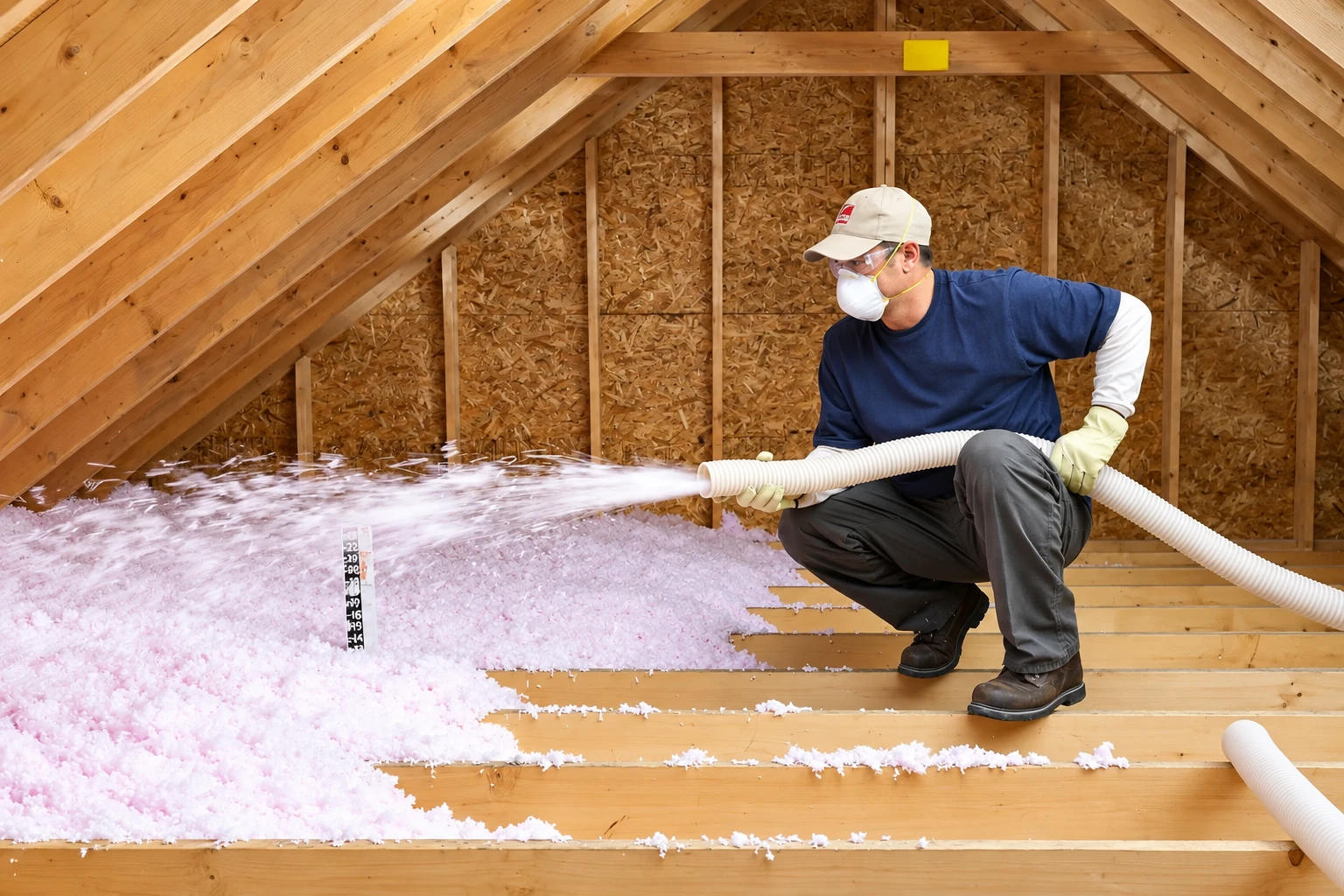
Blown-in insulation in Cedar Rapids IA - an attic floor covered evenly to the edges
Cold rooms upstairs and a high heating bill usually trace back to a thin attic. We seal the gaps first, then blow it in level.
Is blown-in insulation right for my attic?
Blown-in insulation is loose fiberglass or cellulose that we blow through a hose across the floor of a vented attic, and for a lot of Cedar Rapids homes it's the most direct way to keep heat in the rooms below. Many older houses have little or no insulation up there, so this adds what's missing.
Most people call us because a room is drafty, the floors upstairs are cold or the heating bill looks wrong, and they aren't sure what's actually in the attic. The price mostly turns on how big the attic floor is, how many inches are already up there, how many gaps need air sealing before the fill goes in and whether anything has to be fixed or pulled out first. Those same fixes set the schedule, because we won't blow anything over a problem, and I'll give you your own figure when I write the estimate after seeing your attic.
How we install blown-in insulation
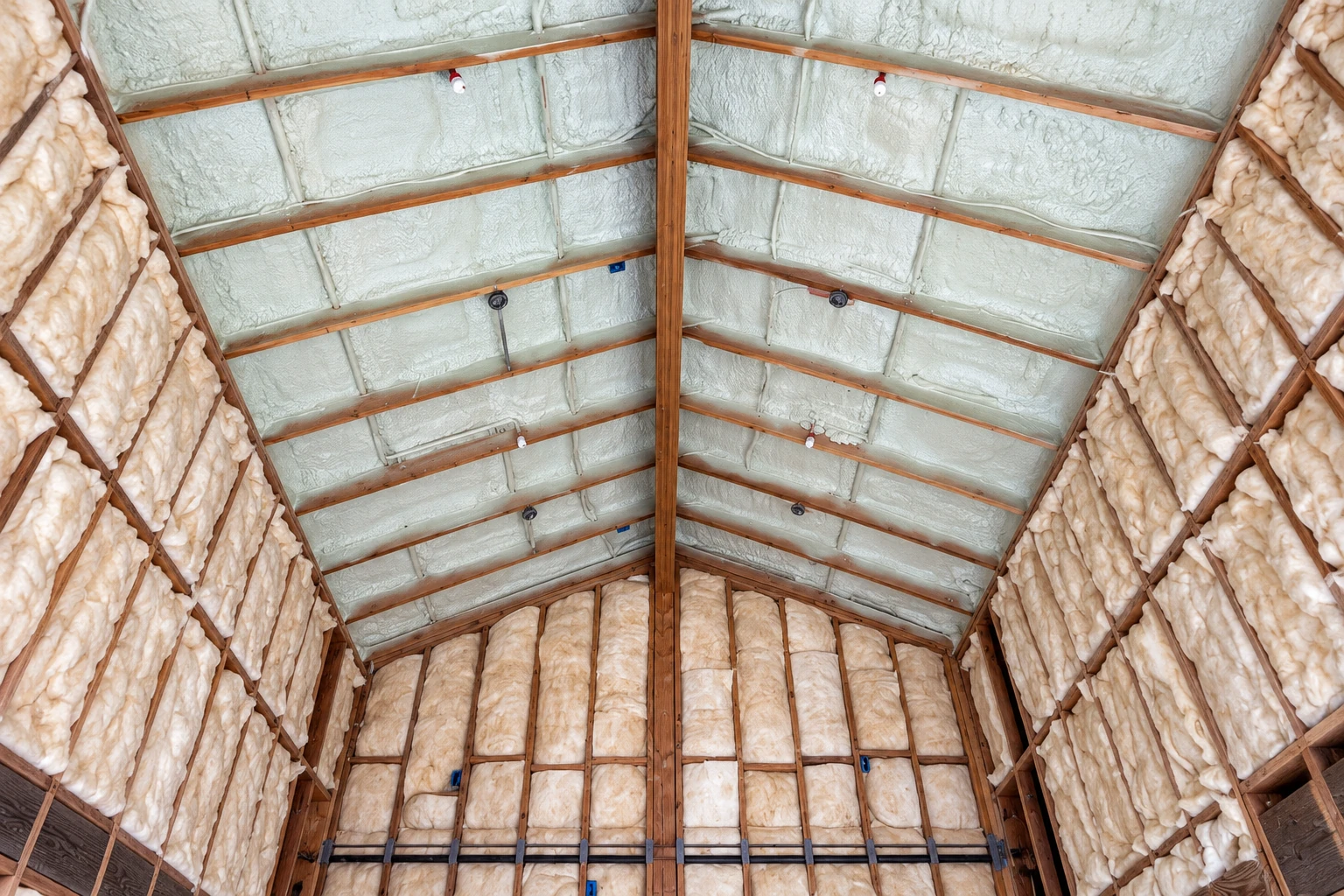
On an attic floor, blown-in is usually what I suggest first, but I start with a flashlight up there, looking at what you have and how deep it is before we price anything, the same way you'd figure out why a tractor won't start before buying parts. Our crew then seals the gaps around pipes, wires and the hatch, because insulation laid over open holes is like a blanket with the window cracked. Big holes and open soffits get solid blocking, hot flues get metal blocking and collars, and some can lights get covers. We set baffles at the eaves so the attic keeps breathing and the fill can't slide into the soffits, then spread it level from wall to wall, full depth right out to the edges where older jobs usually run thin. If your hatch opens from the living space, it gets an insulated cover and blocking around the opening so loose fill can't fall through.
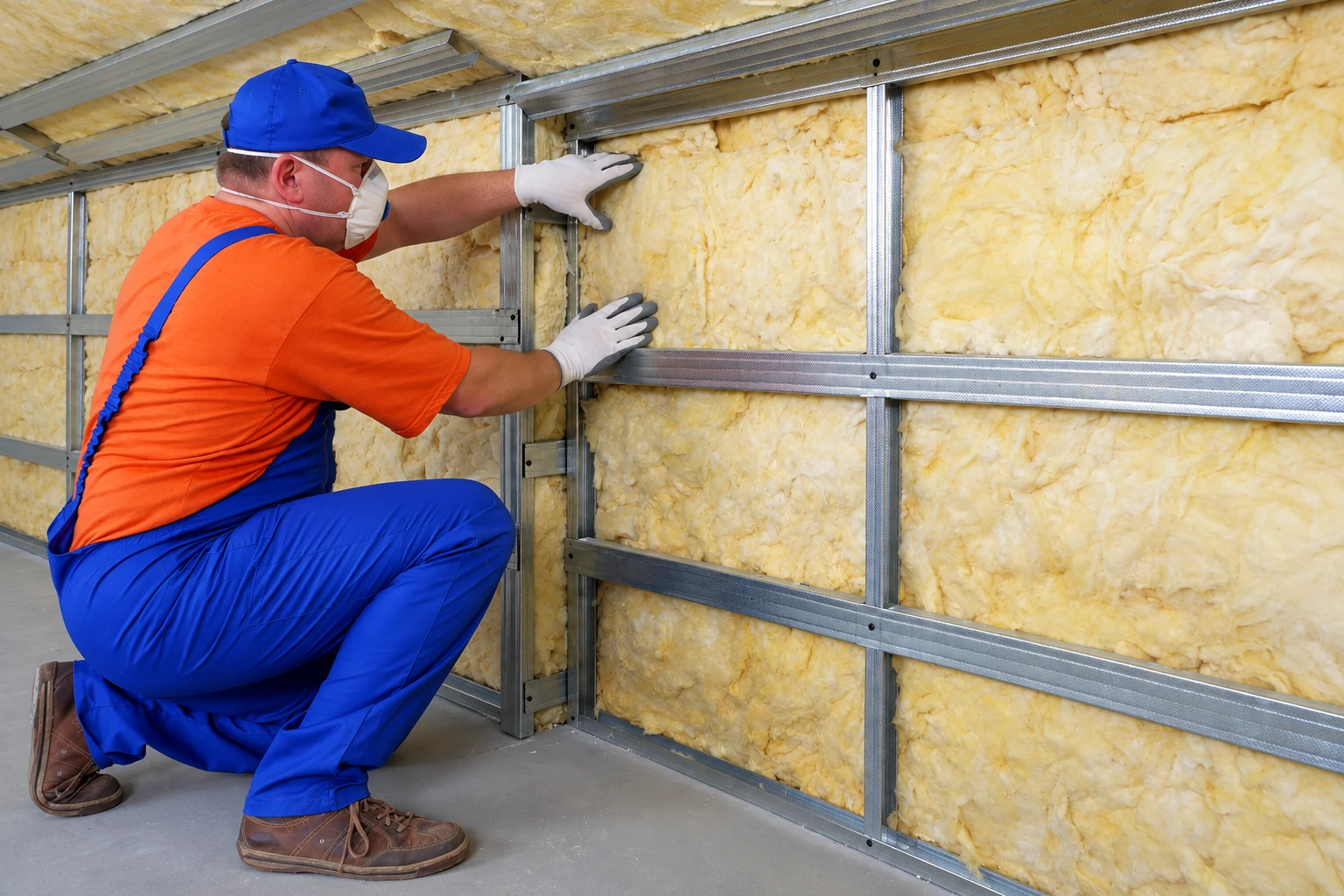
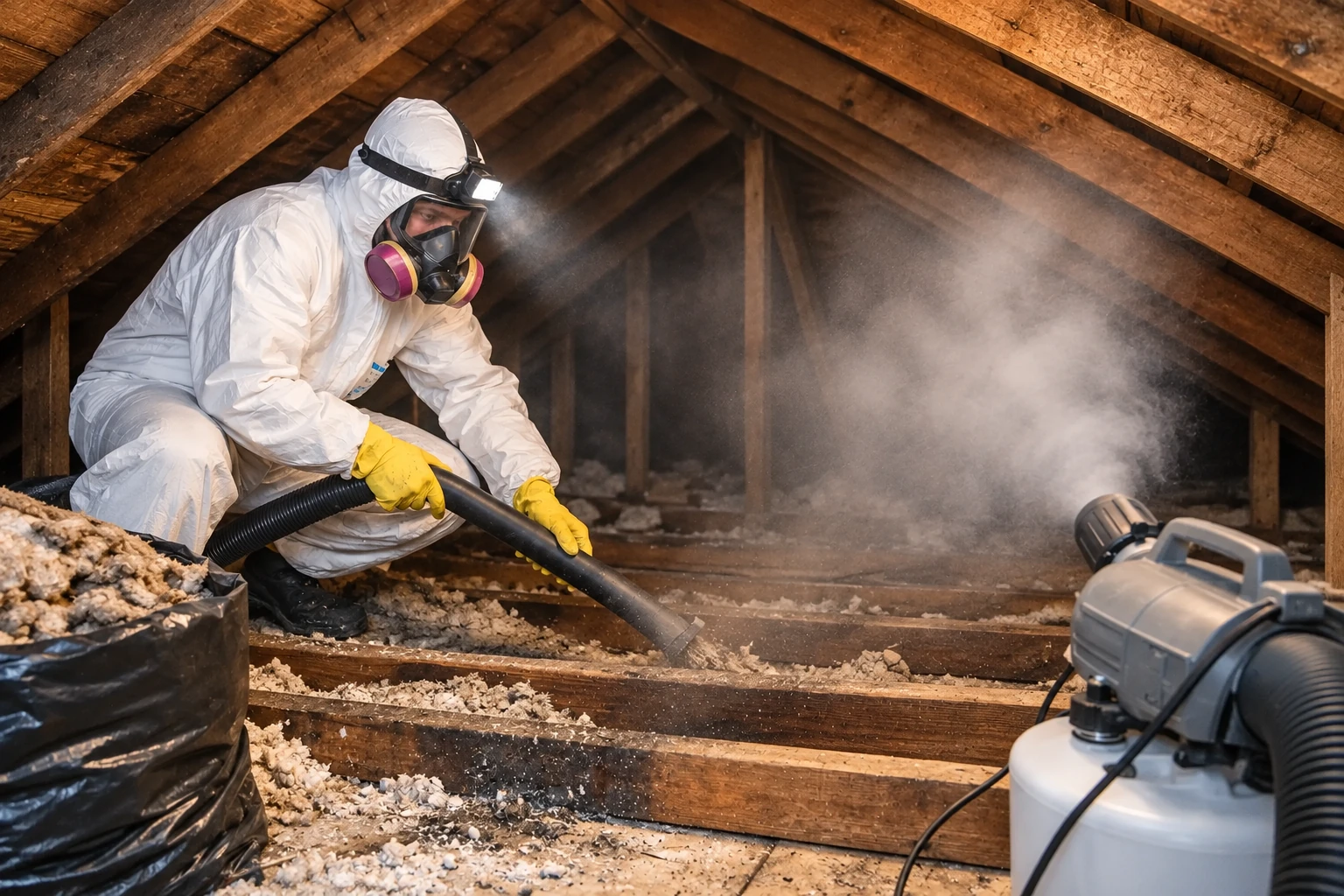
Sometimes the attic is only part of the story. If drafts are also coming through the walls, floors or crawl space, our home insulation work looks at the whole house, and when the old fill up there is soaked or full of droppings, we do the insulation removal first so the problem doesn't get buried under new material.
Loose-fill fiberglass
Fiberglass is light, doesn't hold water and keeps its fluff well, so it suits most attic floors where we're adding to what's already there. It's the one we reach for most often on a straightforward top-up.
Cellulose
Cellulose is treated recycled paper that packs denser, which helps slow air moving through the layer. It suits attics with lots of small gaps and odd framing, as long as the attic stays dry.
Topping up or starting over
If what's up there is dry and in decent shape, we blow new fill right over it and you keep what you already paid for. If it isn't, it comes out first, which adds cost but beats sealing a problem in.
Foam when ducts run up there
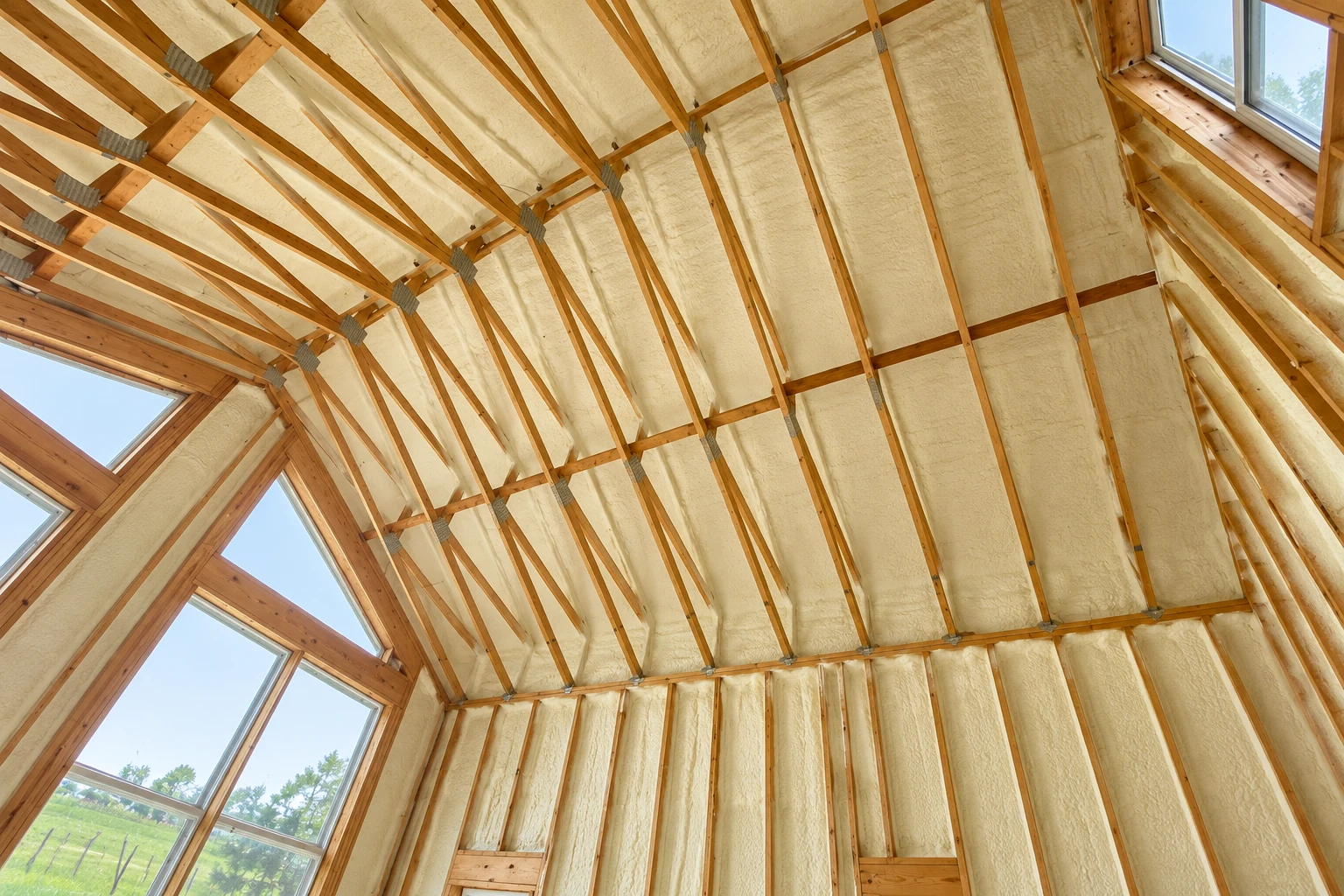
Spray foam costs more and seals air while it insulates, so sealing the gaps and topping up with loose fill usually wins on an attic floor. When your ductwork lives in the attic, foam starts to make more sense, and I'll tell you which way I'd go.
Blown-in insulation in Cedar Rapids starts with a call to the city
Iowa's Department of Inspections, Appeals, and Licensing tells contractors to check with the city or county government on every project to learn the local requirements, so for a Cedar Rapids attic that's the first call we make. We don't assume either way, and if the office tells us a permit is needed, we take care of it before the crew shows up.
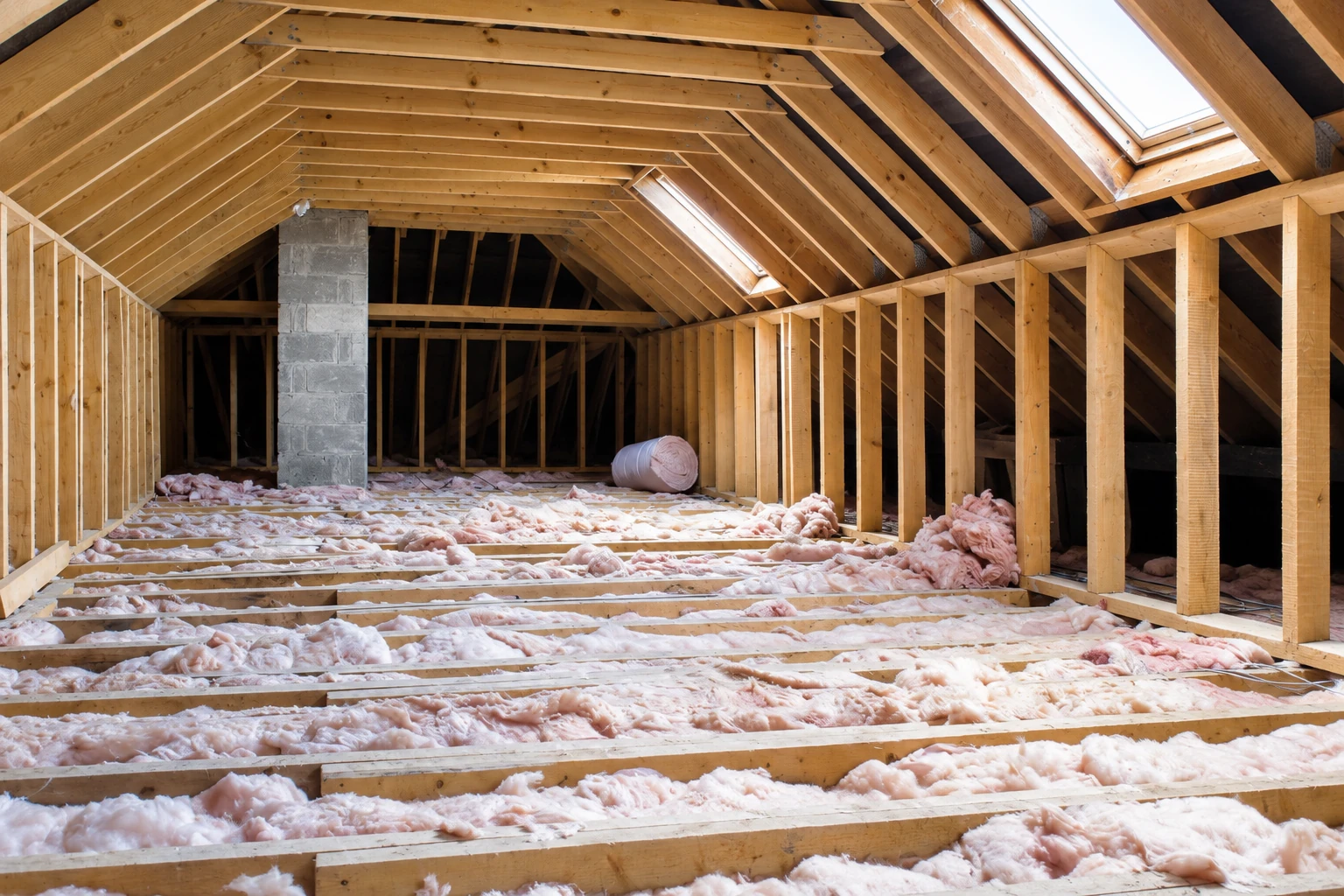
What we find up here is mostly older houses with a thin layer that's settled over the years, heaped in the middle and bare near the eaves, sometimes with vents buried by an earlier top-up. We see the same attics on jobs in Marion and Hiawatha, and the fix is the same, opening the eaves, sealing, then leveling it out.
Blown-in attic work up close
Why call us for blown-in insulation
I write your estimate myself
I come out to look at every job and write the estimate myself, and our installers do the work. When they're done I go over it with you, so the person who sized up your attic is the one checking it.
You'll see what's up there
We're best known for taking the time to show you what's going on in your attic and why it matters. A homeowner who knows why we're doing something can make a good call on what to spend.
Licensed and insured for every job
We're licensed and insured. The same state office requires construction contractors who earn at least $2,000 a year from construction to register with it, a rule that applies to any crew you hire.
Cedar Rapids based since 2021
I learned insulation working on other crews and started this business in Cedar Rapids in 2021. We're based here and work in the cities around it, across Linn County and south toward Iowa City.
On blown-in, the part that matters most is the order, fixing and sealing before anything gets covered up. Call (319) 536-8073 or request an estimate and I'll come take a look.
(319) 536-8073Get a blown-in insulation estimate for your attic
We reply within one business day to set a time, and I come out to look at your attic and write the estimate myself. The estimate is free, done on site and comes with no obligation.
Blown-in insulation questions from Cedar Rapids
What is the best way to insulate an attic floor, blown-in or batts?
For most attic floors, blown-in is the better pick, because loose fill is usually cheaper to install than batts and covers better around joists and wires, though costs can vary. That comparison comes from older federal guidance, so treat it as a general rule. If your attic is the exception, I'll tell you when I'm up there.
What should be fixed in my attic before adding blown-in insulation?
ENERGY STAR recommends having a professional fix wet insulation, moldy or rotted framing, little or no ventilation and any vents blowing moist air into the attic before it gets insulated. Old knob and tube wiring needs attention too, since it can be a fire hazard where insulation touches it. If you see flaky gray vermiculite, leave it undisturbed, because it may contain asbestos and should be tested by an approved lab first.
How much does blown-in attic insulation cost in Cedar Rapids, IA?
Attic insulation in Cedar Rapids usually costs about $1,400 to $4,600 per job, and that's the going rate around here, not our price. Where yours lands depends on the attic's size, what's already up there and what has to be fixed first. Alliant Energy says the federal Weatherization Assistance Program sends trained pros to qualifying households for free energy updates, which can include insulation.
Can blown-in insulation help stop ice dams on my roof?
It can help, when the attic is properly sealed and insulated together. Heat leaking up from the house warms the roof and melts snow that refreezes at the cold edge, so both pieces matter. That's why we plan the sealing and the insulation as one job.
How do I know if my attic needs more insulation?
Open the hatch with a flashlight and look, because if you can see the tops of the ceiling joists, there's room for more. Cold floors upstairs, drafty rooms and a thin layer near the eaves are other signs. Just look from the hatch and don't dig around, and I'll measure what's there when I come out.
Can air sealing my attic affect my gas furnace or water heater?
In some cases, yes, because tightening up a house can cause exhaust from gas or oil appliances to flow back inside. Owners with those appliances may want a Home Performance Contractor to test that they vent properly before and after the sealing. Tell me what's in your house when I come out, and we'll plan around it.
Get your attic checked before adding blown-in insulation
Call (319) 536-8073 with your home's age handy, and mention any wet spots or gray, flaky fill you've noticed so I come ready.