Closed-cell foam insulation in Cedar Rapids IA - walls that keep damp and drafts out
Basement walls that feel damp or a room that never warms up? We spray a dense foam that insulates, seals air and holds back moisture.
What does closed-cell foam do for my house?
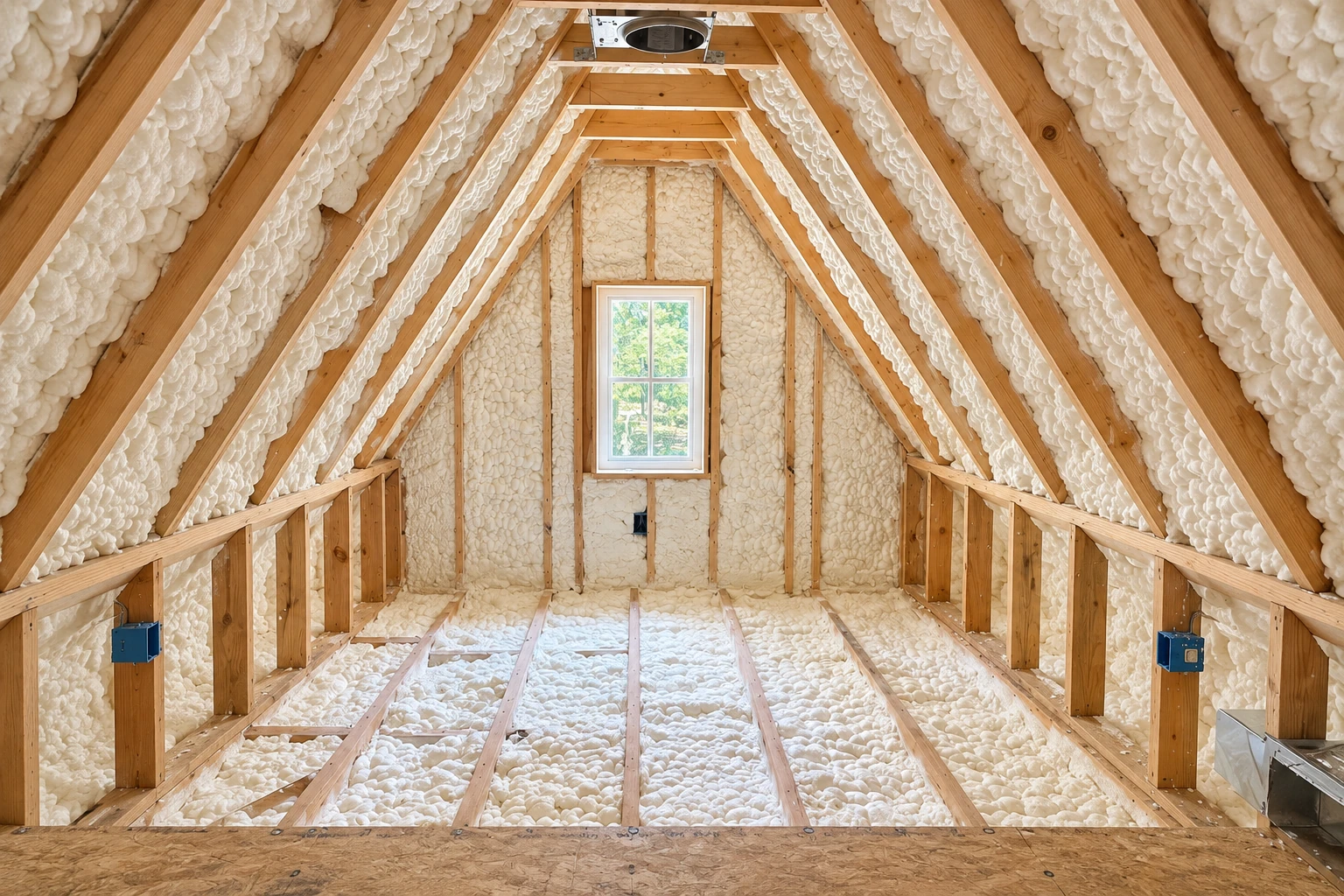
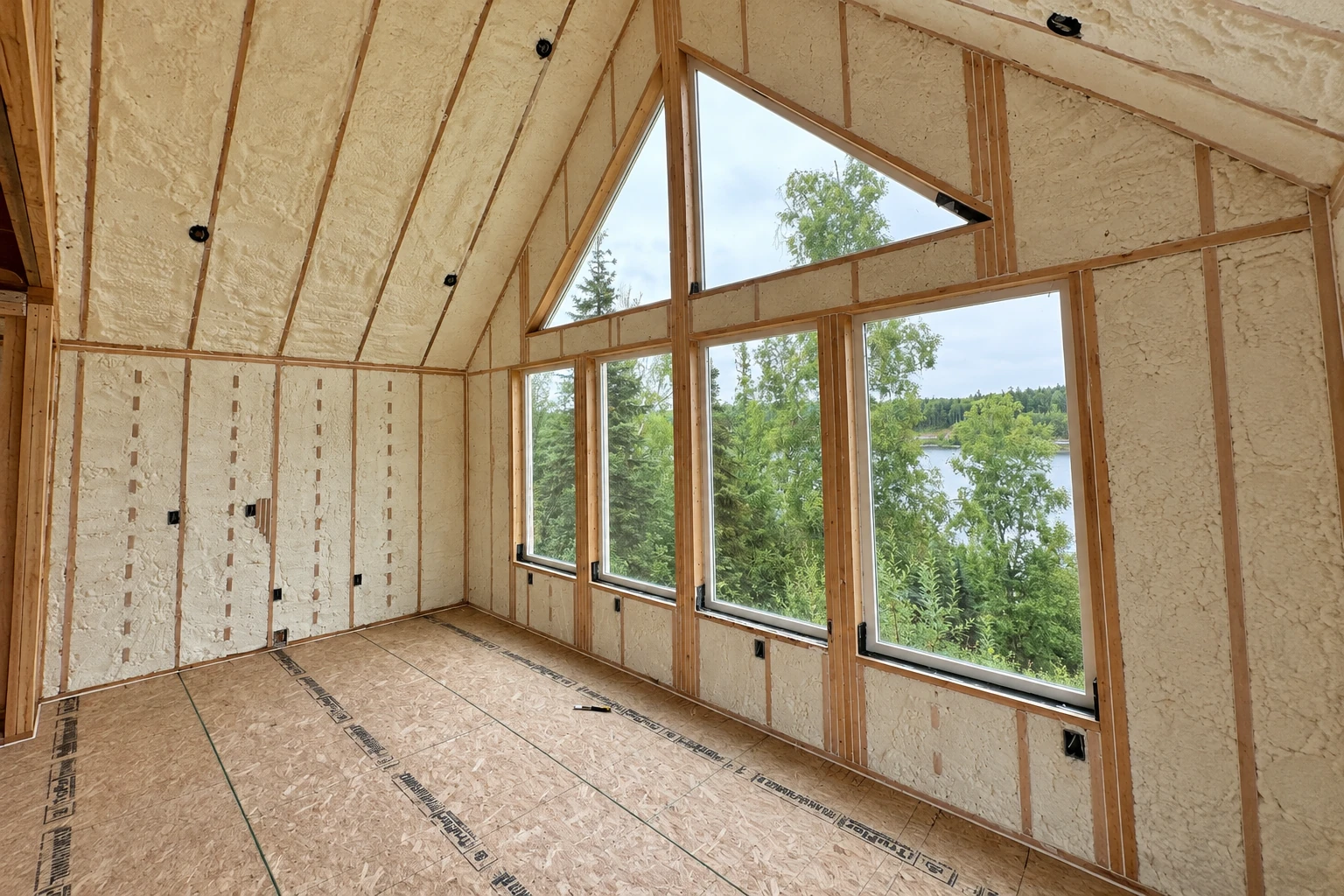
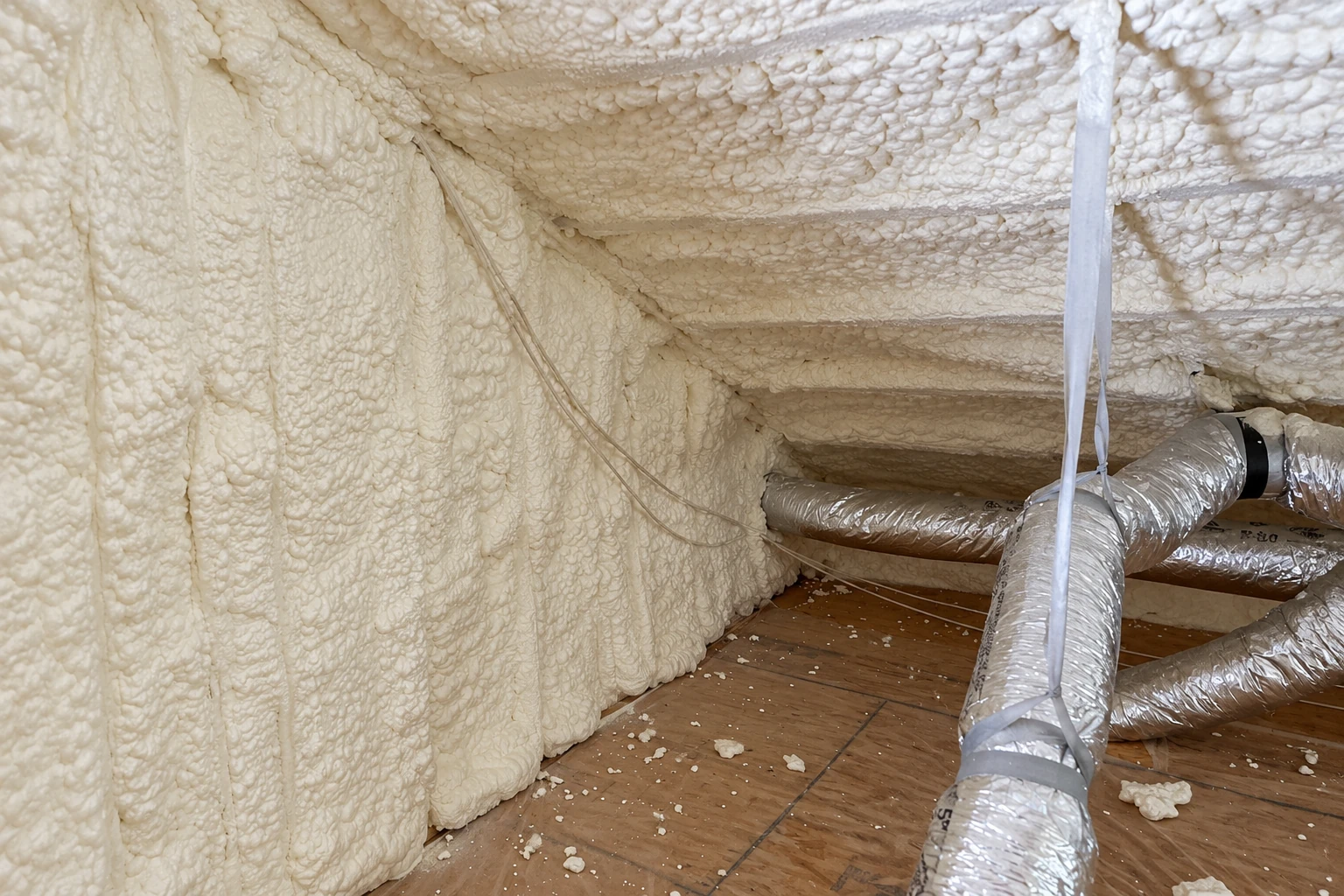
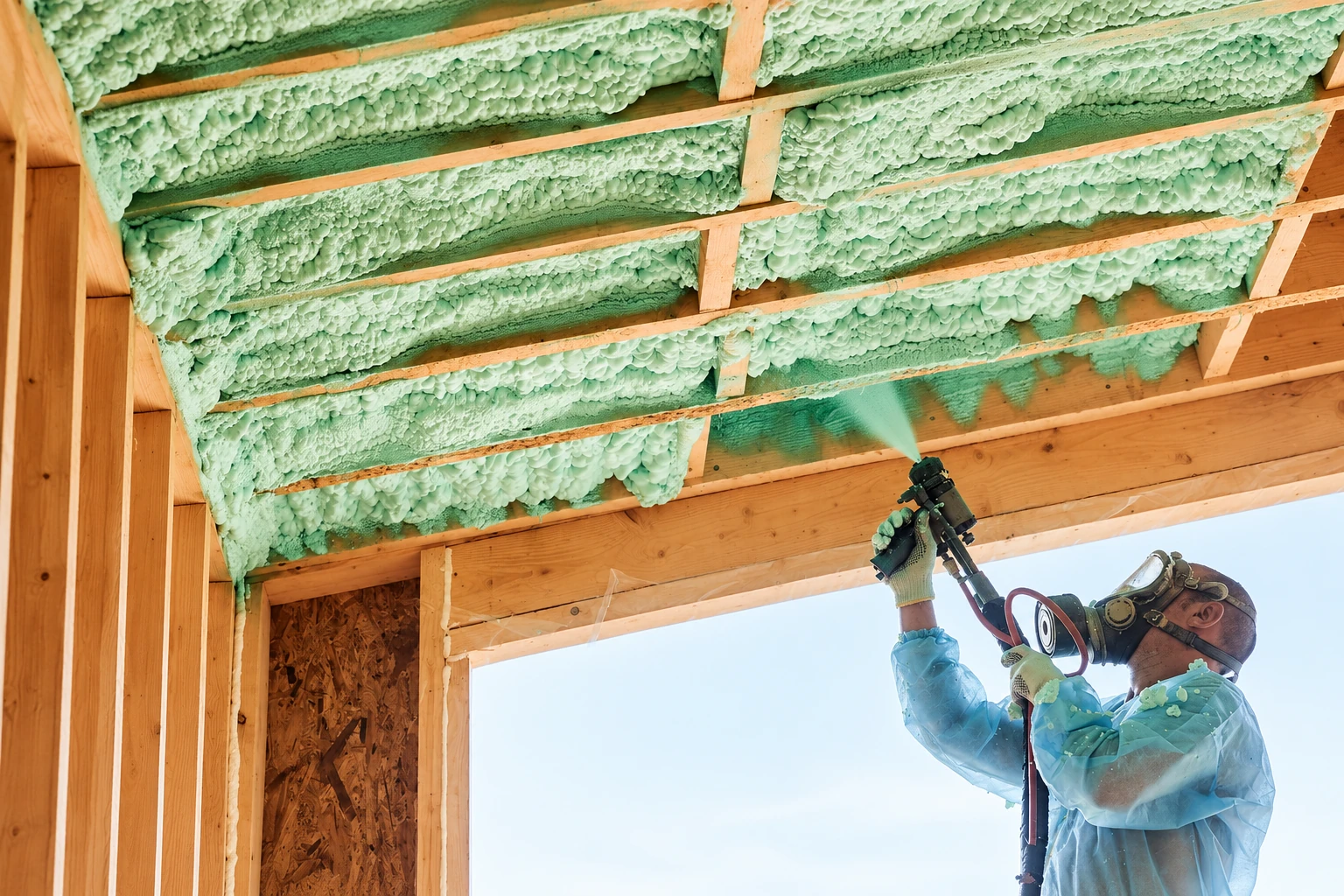
Closed-cell foam insulation is a dense, rigid foam we spray into walls or along the inside of outside walls in Cedar Rapids homes, and one layer does three jobs. It slows heat, it stiffens the wall it's bonded to, and it's the only spray foam that resists water and slows vapor, so it can act as a backup barrier against moisture.
Most people who call about foam have a basement that smells damp, cold floors over a crawl space, or a room over the garage that never warms up, and foam is usually the answer when moisture or air leaks are part of the trouble. The price moves with how much area we cover and how thick, whether old insulation has to come out first, whether the walls and ceilings are already finished or the foam has to be injected into closed walls, and how hard the space is to reach. The schedule turns on those same things plus the time your household spends out of the house while the foam cures, and the estimate puts a number on your house. If it's a crawl space you're worried about, our crawl space insulation page covers the other ways to handle it.
How we install closed-cell foam insulation
I start every closed-cell job by looking at what's there and showing you, because foam sprayed over a wet or moldy wall just seals the problem in, the way paint over rust on a gate looks fine while the rust keeps going. Closed-cell is the dense, water-resistant foam, so it's my pick where moisture is a worry, including walls below grade, and where it isn't, I'll tell you when something cheaper will do. Before you book, we talk through how long you'll be out of the house and any health concerns in the household, so you can line up somewhere to stay. On the day, our crew pulls out old insulation that's soaked or dirty, makes sure the surface is clean and dry, covers everything that shouldn't get foam, and sprays the foam on in layers until it reaches the depth we agreed on. Then we trim it, clean up and air the house out before anyone comes back.
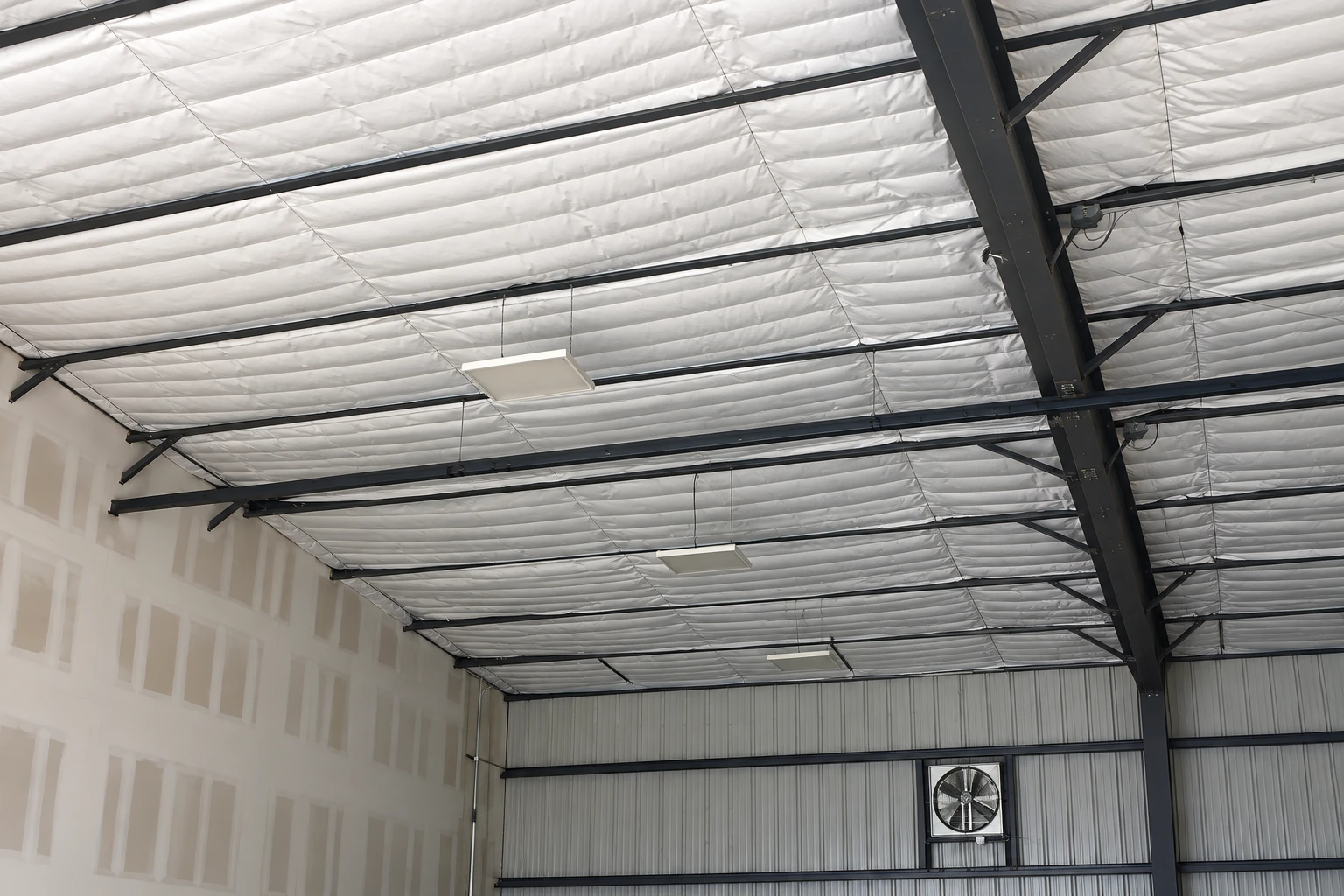
Closed-cell isn't the only foam we spray. On interior walls and other spots that stay dry, open-cell foam insulation is the softer, lighter foam and usually costs less for the same space. We also handle commercial insulation for shops, offices and outbuildings, where the same dense foam often goes on metal walls and roof decks.
Basement and foundation walls
This suits a basement you plan to finish or one that runs damp, because closed-cell foam holds up against concrete instead of trapping moisture behind a wall. It's the one spray foam we'd put on a wall below ground.
Rim joists and crawl space walls
The rim joist, the board where the house framing sits on the foundation, is one of the leakiest spots in most houses and often the reason the floor above feels cold. A few inches of closed-cell seals those gaps and keeps damp air off the wood.
The room over the garage
Garage air and cold leak up through that floor, and closed-cell foam seals the leaks while it insulates. It works best when the garage ceiling is open or can be opened, since foam injected into a closed ceiling costs more.
Closed-cell foam insulation in Cedar Rapids: what we check first
Iowa's contractor licensing office tells contractors to contact the city or county on every project to learn what's required locally, and that's how we work. Before each closed-cell job I check with the city, or with the county if your house sits outside city limits, and if they tell us a permit is needed, we take care of it so you aren't chasing paperwork while you're planning time away from home.
A lot of our calls come from older houses where nobody's sure what's behind the basement walls or what the last owner put up there. We're based in Cedar Rapids and work in the cities around it, across Linn County and south toward Iowa City, and we run into the same damp basements and drafty rooms over garages on jobs in Marion and Hiawatha.
What closed-cell foam looks like
Why call us for closed-cell foam
I write every estimate myself
I come out to every job, look it over with you and write the estimate myself. You'll see what's going on in your basement, walls or crawl space and why it matters before you decide what to spend.
In business since 2021
I learned insulation working on other crews and started this business in 2021, so we've been at it five years. That's plenty of time to see what goes wrong when foam goes over a problem nobody fixed first.
A licensed and insured crew
Iowa law requires construction contractors who earn at least $2,000 a year from construction to register with the state's Department of Inspections, Appeals, and Licensing. We're licensed and insured, which matters when a crew is spraying foam inside your house.
I check the work with you
Our installers do the work, and I go over it with you at the end so you can see where the foam went and how deep it is. The job is backed by our satisfaction guarantee.
On a foam job the order of work matters most, because whatever's underneath stays there once the foam is on. Call (319) 536-8073 or request an estimate and I'll come take a look.
(319) 536-8073Request your closed-cell foam estimate
We reply within one business day to set a time for me to come out, look at the space and write up the estimate. The estimate is free, done on-site and comes with no obligation.
Closed-cell foam questions from Cedar Rapids homeowners
How much does closed-cell spray foam insulation cost in Cedar Rapids?
One local cost guide puts closed-cell spray foam in Cedar Rapids at about $1 to $1.50 per board foot. A board foot is one square foot of foam an inch thick, so the price climbs with both the area and the depth. I'll measure your space at the estimate and give you a figure for your house.
How long does my family need to stay out after closed-cell foam is sprayed?
Plan on at least 24 hours away, because safety guidance says residents should leave for at least that long. Re-entry time, when it's safe to come back, comes once the foam has finished curing and the house has been aired out and cleaned, not just when the clock runs out. We talk it through before you book so everyone has a place to stay.
Is closed-cell spray foam safe if someone in my house has asthma?
Anyone with asthma, respiratory allergies, a skin condition or a past reaction to isocyanates, a chemical used in spray foam, should go over the product information carefully before choosing it. If that leaves you uneasy, other kinds of insulation are a fair choice. I'll tell you plainly if another product makes more sense for your household.
What is the best way to insulate basement walls below ground in Cedar Rapids?
Closed-cell foam is usually the best choice for walls below ground, because it's the spray foam that stands up to damp concrete. It won't stop an active leak, though. We look for water coming through the wall first and get that handled before any foam goes on.
Does closed-cell foam in a basement need to be covered with drywall?
Often, yes. The spray foam trade group says foam left exposed, without a code-required barrier such as drywall, may need an added fire-protective covering or coating. If you're leaving the basement unfinished, tell me at the estimate so that's part of the plan.
Is closed-cell foam worth it in an attic, or is blown-in insulation cheaper?
In most attics it isn't the best use of your money, because sealing the gaps and topping up blown-in insulation, loose fill blown through a hose, usually does the job for less. Foam costs more but seals air while it insulates, so I recommend it up there when your ductwork runs through the attic.
Book a closed-cell foam estimate for your house
Call (319) 536-8073 or use the form with your rough square footage, attic access and any health concerns, and we'll plan the visit around them.